
🔥 1968: The Year Authority Blinked (And We Never Looked Away)
Hey, Gen X. Welcome back to Vintage Viv. Today, we’re talking about 1968.
You might not remember ’68. As an early Gen X you were maybe three , still mastering the art of the temper tantrum. But trust me, 1968 was the year our world truly caught fire, and we inherited the ashes. Our parents—the Boomers—were still high on idealism; 1968 was their glorious, terrifying crash landing.
We didn’t experience the revolution, but we absolutely absorbed the hangover. And that hangover explains everything about us.
💥 The Global Explosion: When Authority Took Its Mask Off
Forget the neat history books. In 1968, the world decided to break its own rules, and the news coverage was wild—if you could get the news, that is.
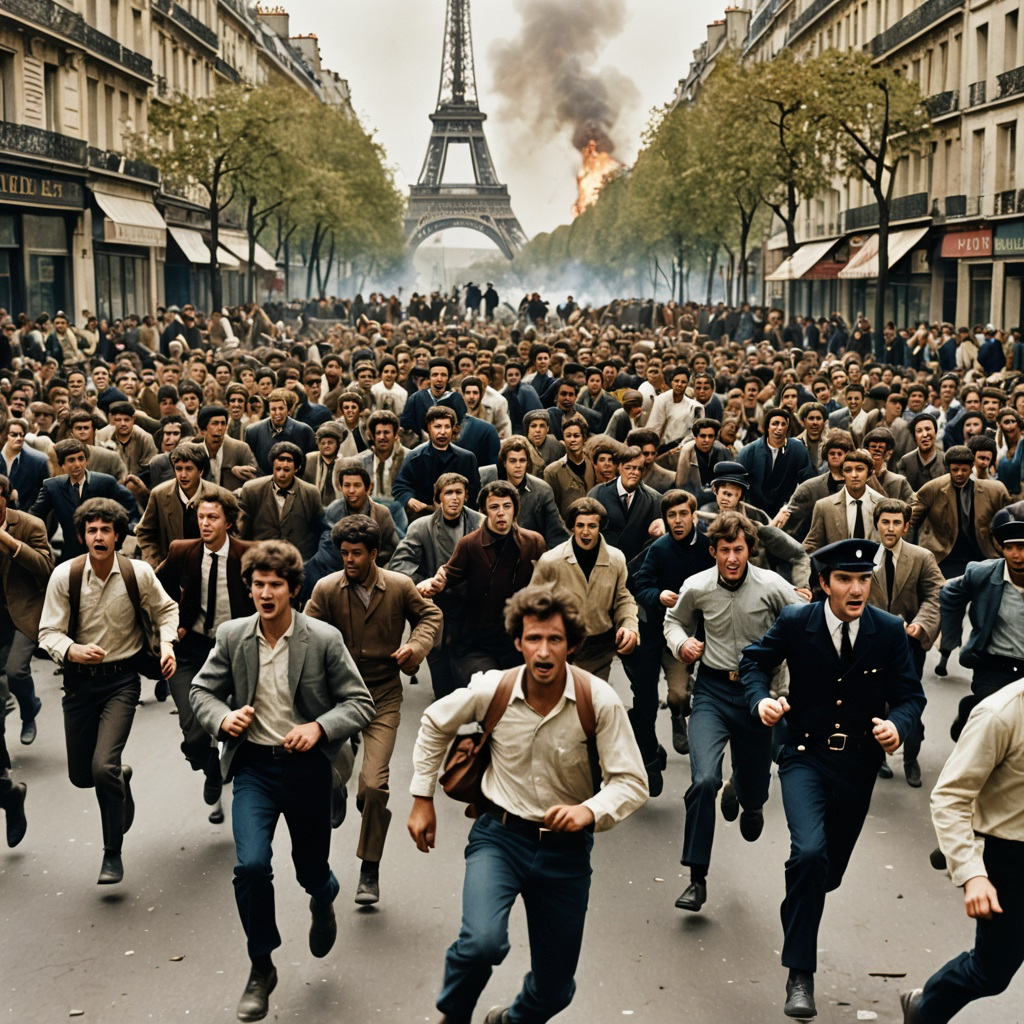
- Europe: Hope, Then Reality. First, you had the Paris student protests—all that energy and drama about throwing cobblestones and changing the world. It was fun, inspiring stuff! Then came Prague Spring. That’s where things got real. Czech reformers tried to bring in some actual freedom, and what happened? The Soviet Union rolled in with tanks. Boom. The takeaway, broadcast through grainy international news? Idealism is great—until someone with a tank shows up. It was a hard lesson and shaped our cynicism. We learned early that when it comes to power, the big players don’t mess around.
- The Curtain’s Cold Shadow: We grew up with the Iron Curtain as a fact of life—a massive, geopolitical Keep Out sign. That Prague moment just confirmed everything we feared about the East. We spent our teens obsessed with the music (Pink Floyd’s The Wall, which felt less like a rock album and more like a geopolitical prophecy) that reflected that tension. And when that physical wall finally fell in 1989? That was our victory lap. We won the Cold War simply by being patient and surviving the weirdness.
- America’s Grief: In the States, the assassinations of Martin Luther King Jr. and RFK meant that two massive voices for systemic change were silenced in the span of weeks. The air of mourning and chaos was palpable, teaching us, the future latchkey kids, that the fight for justice is expensive and often deadly.
🇦🇺 Down Under and Under Pressure: Australia in ’68
Australia’s 1968 was marked by a deep internal and external struggle, solidifying the country’s move away from its strict ‘White Australia’ policy era and deeper into the messy reality of the Asian theatre.
- The Vietnam Draft and Dissent: For young Australians, the Vietnam War wasn’t just TV news; it was a divisive reality. 1968 saw the war intensify, and the controversial national service scheme (the draft) created deep generational splits. If you were a Gen X kid growing up in Australia, this wasn’t an abstract conflict—it was a fight over who might be taken from the classroom next. The massive anti-war protests that followed taught us early that national policy often comes with high human costs.
- The Aboriginal Rights Shift: While the historic 1967 referendum to include Aboriginal people in the census had passed, 1968 was the year the hard work of achieving true equality began. The national consciousness was slowly starting to shift toward reconciliation and recognition, laying the groundwork for the more complex social debates Gen X would inherit later.
🇿🇦 The Deep Scars: Global Hypocrisy and Enduring Conflict
The global conversation wasn’t just about communism versus democracy; it was about hypocrisy and control—issues that became core to our Gen X suspicion.
- South Africa’s Persistent Weight: For those in South Africa, 1968 marked the deepening entrenchment of apartheid, where the system of racial segregation was meticulously solidified into every facet of life and law. Globally, for us growing up, South Africa became a decades-long symbol of unyielding, institutional injustice—a political stain that the ‘free world’ seemed unable or unwilling to fix swiftly.
- Britain’s Internal War: Across the pond, the UK was wrestling with its identity post-empire. Enoch Powell’s “Rivers of Blood” speech in the spring of ’68 brought the uncomfortable, messy, and racist internal conflict over immigration roaring into the public square. We didn’t get a clean, progressive path; we got a complicated, shouting argument over who belonged where.
🤫 The Gen X Legacy: Why We Went Silent
So, what does a three-year-old do when the adults are either grieving, fighting the system, or simply busy redefining their identity? We got busy raising ourselves.
The energy that drove the ’68 revolutions also drove personal liberation. Our parents were focused on self-discovery, feminism, and breaking free from tradition. They didn’t have time to hover. We achieved peak unsupervised childhood because our parents had peak revolutionary zeal.
- The Gen X Lesson: Don’t engage in grand gestures; they fail (Prague). Don’t trust the leaders; they get shot (MLK/RFK). Just adapt, watch the door, and rely on yourself. That’s where our famous ‘X’ cynicism comes from.
📊 The Generational Battle: Gen Z and the Small Revolts 📱
Now, fast forward to today. We’re nearing retirement, and the world is alight again.Gen Z is rising up, and their protests are making waves around the world. These movements are fueled by financial instability, high unemployment, and outrage over corruption and nepotism (or “Nepo Kids”) among political elites (Source: United Way NCA).
- Asia: Ousting of regimes/leaders in Bangladesh (2024), Nepal (2025), and Sri Lanka (2022).
- Africa: Forcing out the President in Madagascar (2025) and pushing policy reversals on tax bills in Kenya.
- Americas: Protests focusing on structural corruption in nations like Peru and Mexico.
So, is it the same as ’68? No. The core idealism feels familiar, but the stakes are higher—they’re existential—and the methods are brand new. This generation’s approach is hybrid activism. They excel at decentralized, leaderless coordination using digital platforms like TikTok, which has kicked off a new era of networked activism. This allows them to sidestep the repressive tactics governments often use to neutralize leaders (Source: SWP Berlin). Their protests are about demanding dignity, accountability, and competence from the institutions in power (Source: Shyam Tekwani, The Wire).
For a deeper dive into the specific economic and political factors that are fueling these youth-led uprisings across the globe, check out this video: These are the Countries at Risk of a Gen-Z Revolution.
 Vintage Viv
Leave a comment